
This is not a comforting book.
Truth be told, this is the second time I’ve read Man’s Search For Meaning. The first was more than 15 years ago—and it definitely resonates more deeply as you experience more of life. What once felt philosophical somehow feels practical now. Another interesting fact: this book has been gifted to me three times and I find that oddly flattering!
Man’s Search For Meaning
by
Viktor E. Frankl
Viktor Emil Frankl born in 1905, was Professor of Neurology and Psychiatry at the University of Vienna Medical School. He was also a Holocaust survivor, who founded logotherapy, a school of psychotherapy that describes a search for a life’s meaning as the central human motivational force. He died in 1997, aged 92 years and this book is his legacy. The book was first published in 1946 and this blog is based on the edition published in 2008.
Survival
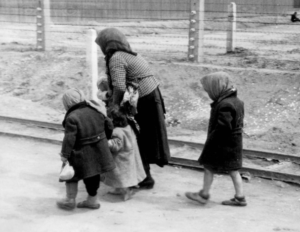
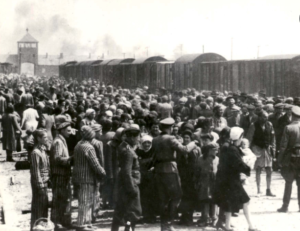
The accounts of his life at the prisoner camps are not for the faint hearted. Even after all these years, the fact that humanity was capable of committing such acts of torture is simply terrifying. However, this book is about those who were at the receiving end and more importantly – why did any of them survive.
“It is first of all a book about survival. Like so many German and East European Jews who thought themselves secure, Frankl was cast into the Nazi network of concentration and extermination camps. .But his account in this book is less about his travails, what he suffered and lost, than it is about the sources of his strength to survive.
Frankl’s concern is less with the question if why most died than it is with the question of why anyone at all survived.”
That shift in question changes the books narrative and forces you to look at certain parts with a detached curiosity rather than anger, disgust or just shock. Frankl asks a far more uncomfortable question: What enables a human being to survive when almost everything that makes life worth living is taken away?
“Yes, a man can get used to anything, but do not ask us how.”
That sentence captures both the horror and the resilience of the human condition. Living on scraps, with no sanitation, no adequate clothing, forced into hard labour in snow – some of the descriptions tell the story of prisoners losing all sense of self, as their feet swell with blisters and are somehow forced into shoes cut open to fit them. A stage where man simply loses all dignity and is treated like an animal, with stones thrown at him to call him or make him get up because he has collapsed. It is an account that is devastating because it’s true.
The word ‘adaptation’ takes on a whole new meaning. On his first night in camp, Frankl makes a promise to himself: he will not “run into the wire,” which is the camp’s euphemism for suicide by electrified fence. This is not framed as some kind of heroism but as a decision, a choice that he makes, no matter the circumstances.
Frankl observes that those who could locate a reason to live, however fragile, abstract or fleeting it may be, they were more likely to endure unimaginable conditions. Having something to hold onto did not eliminate suffering, but it made it bearable. And importantly, meaning was not something imposed from outside and forced upon you; it was something chosen, from within.
Holding On
In his moments of desperation, Frankl holds on to the memory of his wife. It is a very moving account of how thinking about his wife who was separated from him, allows him to live through some of the many moments of hopelessness – saving him, giving him something to look forward to. Even though at that point he has no idea if she is still alive.
“A thought transfixed me: for the first time in my life I saw the truth as it is set into song by so many poets, proclaimed as the final wisdom by so many thinkers. The truth- that love is the ultimate and the highest goal to which man can aspire. “
As Frankl observes the mental states of prisoners deteriorating and recounts his own thoughts, he shares an invaluable insight. That neither success nor happiness can be pursued and it usually is the side effect of being involved in something greater than your own self – whether it is community, your family, a cause, a life project in the pursuit of knowledge – anything that goes well beyond self-preservation and pleasure.
“For success, like happiness cannot be pursued; it must ensue, and it only does so as the unintended side-effect of one’s dedication to a cause greater than oneself…”
It struck me that everybody who has been a prisoner of war and torture would have experienced this despair. The human spirit to rise above such hopelessness and pain is truly a thing of beauty. But what if this is only possible as a collective? As a people? And what if you have to bear this in isolation? Would that be the ultimate breaking point?
Responsibility
Despite the tragedies that he witnessed and the hurt he survived – Frankl does remain unsentimental. He observes how prolonged dehumanization of the prisoners erodes their personal ego, and yet, he insists on something radical:
“The experiences of camp life show that.. Man can preserve a vestige of spiritual freedom, of independence of mind, even in such terrible conditions of psychic and physical stress…. sufficient proof that everything can be taken from a man but one thing: the last of the human freedoms-to choose one’s attitude in any given set of circumstances, to choose one’s way.”
For me, this is the core of the book. Not optimism or positivity. Just responsibility.
Logotherapy and The Existential Vacuum
Frankl is the founder of Logotherapy, a form of psychotherapy grounded in the belief that the primary human drive is not pleasure or power, but meaning. Much of our modern woes, he suggests, come not from trauma but rather from a kind of emptiness—a sense that life lacks direction or purpose. Frankl describes the “existential vacuum” of the twentieth century—a sense of inner emptiness born from the collapse of tradition and instinct.
When no instinct tells us what to do, and no tradition tells us what we ought to do – because those old structures have collapsed or are challenged – we start to drift. We either conform to what everyone else is doing (conformism) or we submit to totalitarianism. Boredom becomes rampant and the natural outcome of that are all sorts of psychological problems.
Remember that this is text from 2008 at best and perhaps was also in the much earlier editions – reading this in 2026, amid automation, abundance, and unprecedented leisure, feels uncomfortably relevant – imagine that Frankl saw this coming 30-40 years ago!
Today, we live in an age of unprecedented choice, comfort, and stimulation, yet boredom, anxiety, and dissatisfaction are everywhere. Frankl, I think, would argue that this is not a paradox at all – and that it is actually a very logical outcome. When meaning is absent, all this abundance around us – the next holiday, the next big pay check, the next materialistic buy – all this does not save us—it only distracts us.
“..these problems are growing increasingly crucial, for progressive automation will probably lead to an enormous increase in the leisure hours available to the average worker. The pity of it is that many of these will not know what to do with all their newly acquired free time.. Sometimes the frustrated will to meaning (in life) is vicariously compensated for by a will to power, including the most primitive form of will to power, the will to money.”
Frankl offers one final provocation that I end this blog with:
“Live as if you were living already for the second time—and as if you had acted the first time as wrongly as you are about to act now.”
I can’t think of a better way to begin a new year, and here’s to finding meaning.
Best,
Ruta
Happy New Year Ruta.
Awesome blog and keep sharing
Yes with more time in our disposal due to automation, still we appear busy, and yes a purpose , something for community can only push us beyond our comfort zone and offer a new satisfying meaning to our life